Detroit Students Experience the Future of Career Exploration Through Virtual Reality
Building OpportunityEconomic MobilityNov 19, 2025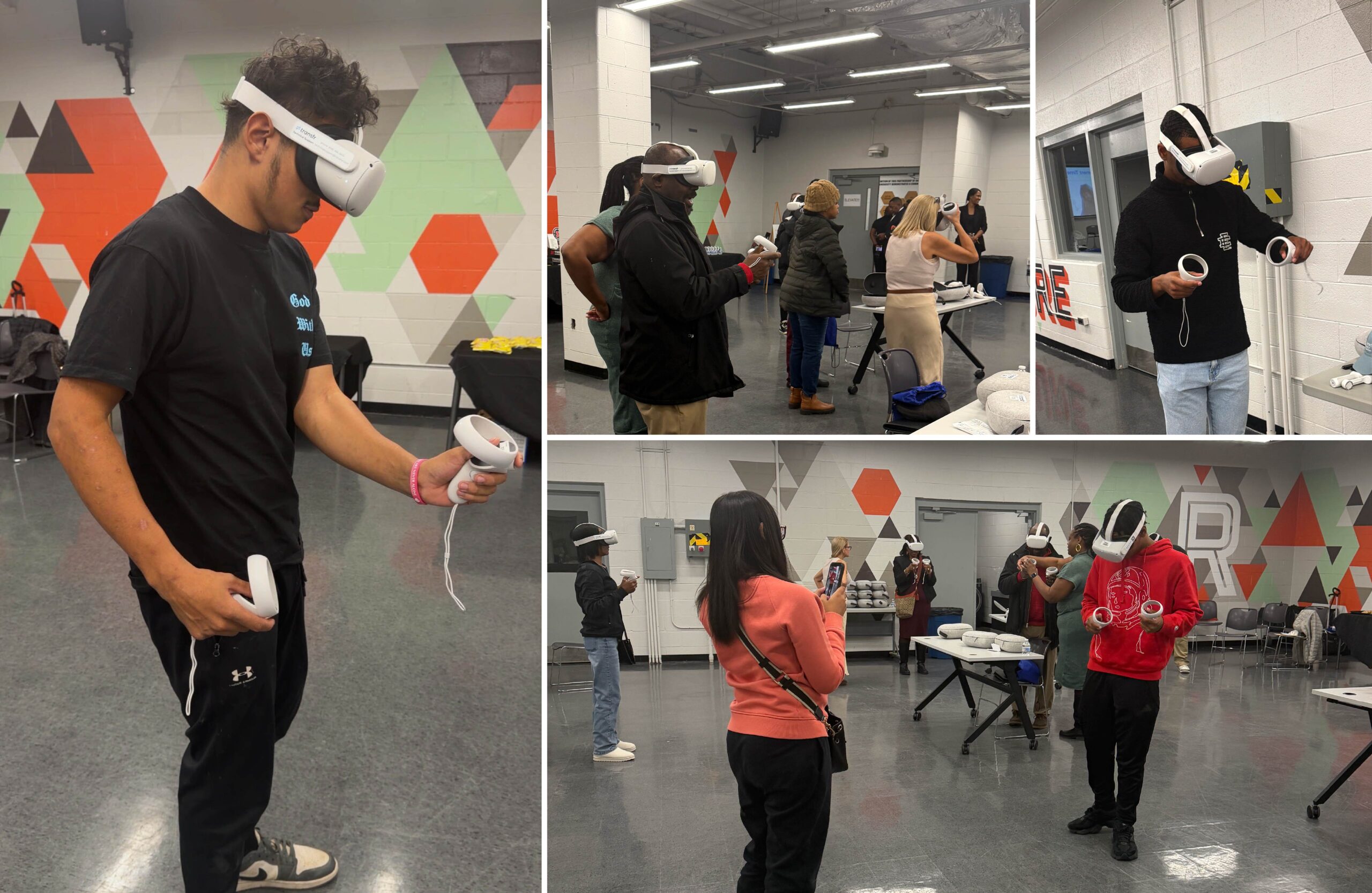
Students, families, and community leaders gathered at Randolph Career Technical Center last week for an exciting glimpse into the future of career education. The kickoff event for the Permission to Dream initiative introduced a groundbreaking approach to career exploration: virtual reality technology that allows students to experience skilled careers in an immersive, hands-on way.
The Gilbert Family Foundation invested $500,000 to Detroit Public Schools Community District (DPSCD) to deploy VR simulators and an online career readiness platform developed by Transfr, a company specializing in virtual reality-based job training and development. The technology will be permanently housed at Randolph Career Technical Center, providing ongoing access for Detroit students.
“Permission to Dream is more than a program, it’s where innovation meets opportunity, and a promise to our young people that their talent, curiosity, and potential have a place in building Detroit’s tomorrow,” said Linda Nosegbe, Director of Economic Mobility at Gilbert Family Foundation. “By bringing real world experiences into the classroom through virtual reality, we are breaking down barriers, opening doors, and empowering Detroit’s students to explore what is possible and pursue the futures they deserve.”
Addressing Real Barriers with Innovative Solutions
For years, educators have faced a significant challenge: how do you give high school students meaningful exposure to careers in construction, manufacturing, and other skilled trades when traditional worksite visits and internships are limited by safety concerns, logistics, and capacity? The Permission to Dream project offers a powerful solution.
Through VR headsets, students can step into realistic simulations of active construction sites, operate heavy machinery, practice welding techniques, and explore a wide range of skilled trades careers—all in a safe, controlled environment that can serve hundreds of students.
A Night of Exploration and Possibility
Tuesday evening’s event drew roughly 75 attendees, including students, families, DPSCD Cabinet and Board members, and representatives from partner organizations including the Building Trade Council and special guest Chris Gardner.
After welcome remarks from Dana Hughes, DPSCD Executive Director of the Office of College Career Readiness, and Randolph CTC Principal Jared Davis, the Transfr team demonstrated the capabilities of their VR platform. But the real excitement began when students and families got their hands on the technology themselves.
Guests rotated through three interactive stations: VR headset demonstrations where they experienced immersive career simulations, career pathway exploration sessions, and guided tours of Randolph CTC’s state-of-the-art labs and classrooms.
This introductory event concluded with an evening reception, where students and their families were able to network, ask questions, complete enrollment cards for Randolph CTC programs, and connect with educators and industry partners.
Building Pathways, Opening Doors
By providing early, engaging exposure to skilled trades careers, the Permission to Dream program aims to open doors that many students might not have known existed.
DPSCD plans to extend the program’s reach beyond Randolph CTC students, organizing targeted tours for middle schoolers across the district. This early introduction to career possibilities could shape students’ educational choices and future career paths for years to come.
Focused on the Future
With the VR simulators now operational at Randolph Career Technical Center, the real work begins. Students will have ongoing access to explore careers in construction, manufacturing, automotive technology, and other high-demand fields, giving them the opportunity to try out different career pathways before making an informed decision about their respective career paths.
This initiative is part of the Gilbert Family Foundation’s broader commitment to workforce development in Detroit, investing in programs that connect Detroiters with the skills, training, and opportunities they need to build successful careers in growing industries.
For more information about career and technical education programs at Detroit Public Schools Community District, visit the DPSCD website.