The Gilbert Family Foundation
2025 Impact Report

01 A Letter from Our Executive Director

Laura Grannemann

I am honored to present the Gilbert Family Foundation Annual Impact Report for 2025. With the unwavering support of our dedicated partners and community members, we have continued to make meaningful progress in our dual mission: building opportunity for Detroit residents and accelerating a cure for neurofibromatosis type 1 (NF1). This report reflects the transformative work we have accomplished together and reaffirms our commitment to the bold goals that guide us forward.

Read in Full

02 Finding a Cure for Neurofibromatosis

Curing NF

Inspired by the life and memory of Nick Gilbert, our mission is to accelerate a cure for neurofibromatosis type 1 (NF1). As the largest private funder for NF research in the world, we’re proud to support cutting-edge science focused on improving the lives of NF patients worldwide.

Curing NF Year in Review

In 2025, the Curing NF Team continued to advance breakthrough research across multiple therapeutic frontiers. Through investments in cutting-edge immunotherapy approaches, gene therapy, vision restoration and collaborative research infrastructure, we strengthened the global effort to accelerate the development of disease-modifying treatments for NF1.

Read in Full +

03 Building Opportunity

Housing Stability

We’re proud to invest in programs and partnerships that provide safe and stable housing to Detroit families – because stable homes are the foundation for stable communities.

Housing Stability Year in Review

The Housing Stability Team made significant strides in 2025, advancing its core mission of keeping Detroit residents in their homes while building pathways to generational wealth and economic opportunity.

Read in Full +

Arts and Culture

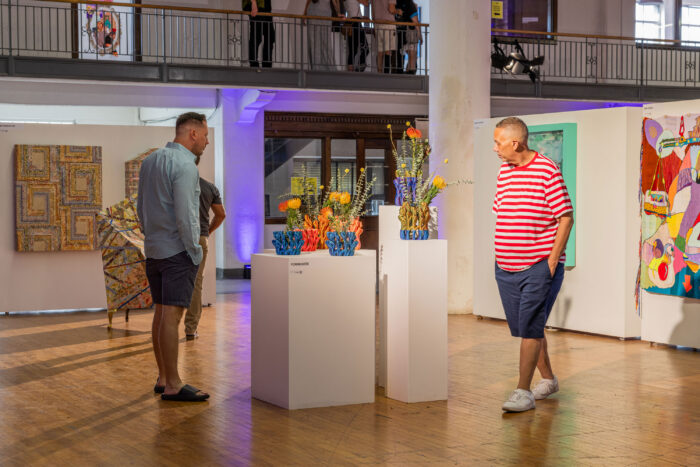
Arts and cultural institutions build stronger, more resilient communities. Our work in this space ensures that every Detroit family has the opportunity to create connections between people and place, highlighting the multifaceted arts and culture scene that is an integral part of Detroit’s legacy.

Arts and Culture Year in Review

In 2025, the Arts & Culture Team demonstrated unwavering commitment to Detroit's creative economy and cultural vitality. By expanding access to cultural experiences, investing in artists and cultural workers, and deepening partnerships with anchor institutions, the team strengthened Detroit's position as a thriving cultural destination and a place for artists to thrive.

Read in Full +

Economic Mobility

Our economic mobility work is guided by a simple but powerful belief: Detroit’s greatest asset is its people. By investing in Detroiters’ skills, businesses and commercial corridors, we’re helping to build a city where opportunity is abundant and accessible to all.

Economic Mobility Year in Review

In 2025, the Economic Mobility Team advanced its mission to connect Detroiters to high-wage careers and entrepreneurial opportunities through targeted investments in workforce development, contractor support, and business acceleration.

Read in Full +

Public Spaces

We believe that every Detroiter should have access to vibrant, inclusive green spaces within a half mile of their homes. Our investments into public parks, programming and grassroots organizations ensure that our neighborhoods and our residents can thrive.

Public Spaces Year in Review

In 2025, the Public Spaces Team advanced its mission to create safe, welcoming neighborhoods where residents can gather, connect, and thrive. Through strategic investments in park revitalization, organizational capacity building, and investing in community stewardship of public spaces, the team strengthened neighborhoods and demonstrated how intentional placemaking can enhance quality of life across Detroit.

Read in Full +

A Letter from Our Executive Director

Building Opportunity in Detroit

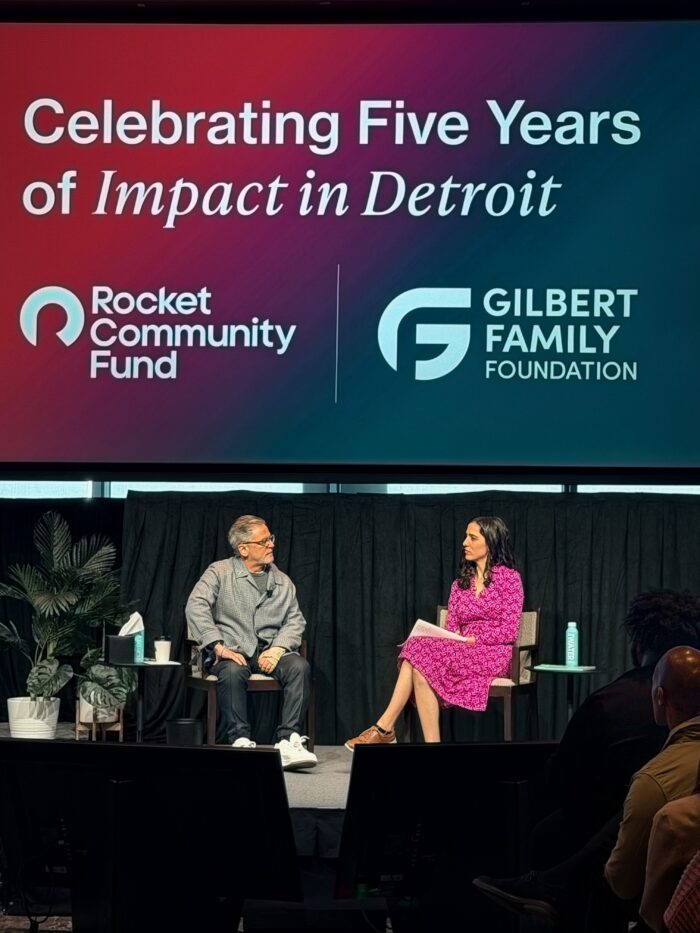
This year marked the midpoint of our joint 10-year, $500 million commitment to Detroit alongside Rocket Community Fund. We remain steadfast in our belief that safe and secure housing is the foundation upon which opportunity is built. In 2025, we deepened our impact by expanding access to property tax relief, legal aid, and home repair services—ensuring that more Detroit families have the stability and resources needed to remain in their homes and build generational wealth.

But stable housing alone often does not create opportunity; it must be coupled with income gains. This year, we have also strengthened our investments in workforce development and entrepreneurship, connecting Detroiters to pathways in high-demand industries and equipping them with the skills to thrive in a competitive economy.

As Detroiters gain access to economic opportunity, we hope they choose to stay in Detroit. Investments in community connection remain crucial. We champion vibrant public spaces, cultural programming, and community-led initiatives that strengthen the social fabric of our neighborhoods and enhance quality of life for all residents.

Through this comprehensive, community-centered approach, we are investing in a Detroit where residents have agency over their futures—where housing stability, economic opportunity, and strong communities work together to unlock pathways to prosperity and growth.

Accelerating a Cure for NF

Gilbert Family Foundation remains the world’s largest private funder of neurofibromatosis research. In 2025, we intensified our efforts to accelerate treatments and cures by advancing breakthrough research focused on slowing brain tumor growth, restoring vision, and accelerating gene therapy treatments. Our investments also center around shared, open data to ensure that information is quickly and easily accessible to all researchers driving toward a cure.

Likewise, we continued building the Nick Gilbert Neurofibromatosis Research Institute, which will be the world’s first brick-and-mortar research institution focused on NF when it opens in 2027.

Ultimately, these investments collectively represent a research pipeline that allows projects to seamlessly progress from the lab bench to a patient’s bedside.

Our commitment to collaboration, rigorous science, and bold thinking continues to drive progress. As Dan Gilbert reminds us, “You’ll see it when you believe it”—and our belief that cures are possible has never been stronger.

Looking Forward

I invite you to explore this comprehensive report to learn more about the progress we have made and the work that lies ahead. To our partners, supporters, and community members—your dedication and belief in our mission make this work possible. We look forward to another year of collaboration, innovation, and shared commitment as we continue building opportunity in Detroit and moving closer to a cure for NF1.

With gratitude and optimism,

Laura Grannemann
Executive Director
Gilbert Family Foundation

Close

Curing NF Year in Review

At Gilbert Family Foundation, our mission is clear: accelerate the development of disease-modifying treatments for neurofibromatosis type 1 (NF1). In 2025, we made significant progress toward this goal, driving forward key initiatives that aim to translate promising research into tangible treatments.

Revolutionary Immunotherapy Approaches Target NF1-Associated Cancers

The Gene Therapy Initiative made a significant investment in advancing CAR-T cell therapy, a cutting-edge immunotherapy approach designed to address one of the most serious and life-threatening complications facing NF1 patients: aggressive sarcomas. NF1 patients face a heightened risk of developing certain aggressive cancers with few effective treatment options. CAR-T cell therapy offers a compelling therapeutic approach by harnessing the body’s own immune system to precisely target and destroy cancer cells, with the potential to provide durable anti-tumor activity.

The research funded at Duke University aims to engineer CAR-T cells specifically designed to recognize and attack NF1-associated cancers across three critical fronts: analyzing NF1 patient tumor samples to identify the best targets on cancer cells, engineering T cells that are stronger, longer-lasting, and better equipped to sustain their cancer-fighting power over time, and validating the therapy in established mouse models of NF1-associated sarcomas. If successful, this work will lay the foundation not only for treating NF1-related sarcomas but for expanding immune cell therapy across the broader spectrum of NF1 tumor types.

Breakthrough in Brain Tumor Treatment

A landmark collaboration between Children’s National Hospital in Washington, D.C., and Lurie Children’s Hospital in Chicago received approval to begin a study evaluating molecular-targeted therapy (MEK-inhibitor) plus immunotherapy (checkpoint inhibitor) for children and young adults with high-grade astrocytomas with piloid features (HGAPs)—aggressive brain tumors that arise in NF1 patients and are highly resistant to conventional treatment. This represents a significant breakthrough in improving survival outcomes for patients with these tumors.

Groundbreaking Research Identifies New Therapeutic Targets

One of the most exciting research developments of 2025 came from a Gene Therapy Initiative-supported research project led by the Clapp Lab at Indiana University. Published in the prestigious Journal of Clinical Investigation and recognized as a significant translational advance in the NF1 field, the research asked a fundamental question: what if we could protect and stabilize the neurofibromin that NF1 patients still have?

The team identified a protein called FBXW11 as a key regulator of neurofibromin levels in the body. When FBXW11 was disrupted, neurofibromin levels increased, effectively strengthening the body’s own natural brake on abnormal cell signaling. Critically, this also corrected ADHD and autism-like behavioral deficits observed in NF1 mouse models, underscoring the potential relevance of this approach beyond tumor biology and into the neurological and behavioral symptoms that significantly impact quality of life for NF1 patients. This work represents a meaningful step toward uncovering druggable targets that could boost neurofibromin levels and accelerate more precise, targeted NF1 treatments.

Vision Restoration Initiative Tackles NF1-Related Blindness

The Gilbert Family Foundation awarded a $2.2 million grant to the University of Pittsburgh and the Eye & Ear Foundation of Pittsburgh to combat blindness caused by Neurofibromatosis Type 1 (NF1). The research, led by Dr. John Ash and Dr. Silmara de Lima, will work to identify novel therapeutic targets, validate promising treatments, and enhance Pitt’s state-of-the-art research facilities.

The award is part of a broader, multidisciplinary initiative by the Gilbert Family Foundation to advance transformative vision research and foster collaboration among 15 leading research centers. This commitment to collaboration is essential. As Dr. Ash explained, “Progress in individual laboratories can take us only so far, but when all 15 institutions come together to collaborate, share discoveries and build on one another’s successes, we can achieve far more and do so much more rapidly for the patients we serve.”

Charting the Path Forward for Gene Therapy

In 2025, members of the Curing NF team and the Nick Gilbert Neurofibromatosis Research Institute (NGNRI) co-authored a perspective article in the Rare Disease and Orphan Drugs Journal titled “From Hype to Hope: Foundational Requirements for NF1 Gene Therapy Success.” The article examines the key barriers standing between today’s science and tomorrow’s treatments and outlines concrete strategies being pursued through researchers supported by the Gene Therapy Initiative to overcome them.

Recognized and featured by the NF Therapeutic Acceleration Program (NTAP), the publication serves as a roadmap for the broader NF research community, helping align researchers, funders, and advocates around a shared vision for progress.

Strengthening the Research Infrastructure

In 2025, the Curing NF team committed to a five-year partnership with Sage Bionetworks to sustain and expand NF Research Tools Central – and by extension, the broader NF Data Portal that shares its infrastructure – a scientific tools database available to the entire NF community. This investment strengthens the research infrastructure that supports NF scientists worldwide.

The partnership focuses on four key improvements to the platform:

Enhanced Search Capabilities – Researchers will be able to discover tools and datasets more easily on the NF Data Portal and NF Research Tools Central. The team is upgrading their core infrastructure and adding AI-powered search features to make finding resources faster and more intuitive.

Better Access to Resources – The team is expanding the collection of preclinical models and reagents available to researchers. This makes it easier for scientists to identify and use the tools they need for their work.

Improved Visibility – Documentation will be enhanced so researchers know what’s available to them—from organoid protocols to algorithms to AI/ML models.

Scalable Integration – As new tools and technologies emerge, the platform will be designed to incorporate them quickly and efficiently, ensuring researchers always have access to the latest resources.

As we reflect on a year of remarkable progress, we remain deeply motivated by the resilience of the NF community and the legacy of Nick Gilbert. While the scientific breakthroughs we achieved in 2025 are significant, our work is far from over. We will continue pushing the boundaries of what’s possible, fostering collaboration among researchers, and driving resources toward transformative treatments.

Close

Housing Stability Year in Review

Access to safe, secure and affordable housing provides the critical foundation people need to build better lives for themselves and their families. Through targeted initiatives in property tax relief, resource navigation, home repair assistance, eviction defense and tax foreclosure prevention, we’re helping Detroit families stay in their homes and build generational wealth.

Clearing the Path: Detroit Tax Relief Fund Reaches New Milestone

The Detroit Tax Relief Fund (DTRF) was first established in 2021 as the foundational program of Gilbert Family Foundation’s $500 million commitment, shared with Rocket Community Fund, to build opportunity in Detroit neighborhoods.

For more than a decade, property tax foreclosure has been the leading cause of blight and depopulation in the city of Detroit. 2015 represented the peak of the crisis in Wayne County with more than 28,000 property tax foreclosures.

However, thanks to sustained investments by Rocket Community Fund and collaborative partnerships across the public, private and philanthropic sectors, we helped turn the tide. In 2024, property tax foreclosures in Wayne County hit their lowest mark in 20 years, representing a 93% reduction overall.

The main reason for this success was a major increase in awareness and utilization of the Homeowners Property Tax Exemption, or HOPE program, which provides income-qualified homeowners with the opportunity to reduce or eliminate their current year property taxes. There was just one problem. Many residents qualified for HOPE, but didn’t know it, leaving them with multiple years of delinquent tax debt.

This persistent property tax debt, along with accrued penalties and interest, represented a major threat to thousands of Detroit families so Gilbert Family Foundation created the Detroit Tax Relief Fund.

The Detroit Tax Relief Fund addressed this challenge by automatically eliminating remaining delinquent property taxes for Detroit homeowners who are approved for the Homeowners Property Exemption (HOPE) program and the Pay As You Stay (PAYS) program. There is no friction or additional application, just relief. Through the end of 2025, the Detroit Tax Relief Fund and its partners have helped nearly 13,000 homeowners eliminate more than $52 million in property tax debt.

In 2025, the stability of the Detroit Tax Relief Fund was threatened by the potential conclusion of the State of Michigan’s PAYS legislation. The Housing Stability team worked with Wayne Metro to adjust DTRF to ensure that the highest priority residents were still being supported while also advocating for the expansion of PAYS at the state level.

The team also expanded ecosystem awareness by introducing seven Detroit-based organizations to Wayne Metro’s resources, strengthening information sharing and coordination across the housing support network.

Connecting Housing to Economic Opportunity

In 2022 the Gilbert Family Foundation’s Housing Stability Team supported the creation of the Detroit Housing Network (DHN)- an alliance of housing agencies that connects Detroiters to a wide variety of housing programs and services. This alliance allows for data collection and analysis across organizations that allow for effective marketing of housing stability opportunities to support Detroiter.

In 2025, DHN members leveraged existing data to identify households with unemployed individuals. Those individuals were then connected to two job fairs in partnership with the City of Detroit and partners support through the Gilbert Family Foundation’s Economic Mobility Team. The job fair drew over 800 attendees and included on-site legal support—including expungement services. The result: numerous residents were hired on the spot or offered employment shortly after. This partnership exemplifies how housing stability serves as a foundation for broader economic advancement.

Home Repairs and Digital Access Drive Community Impact

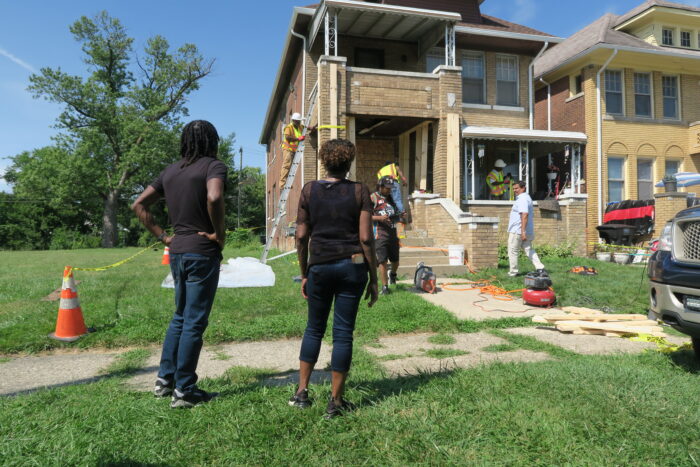
The Detroit Home Repair Fund (DHRF) network significantly increased production in 2025. From launch through the end of 2025, the Detroit Home Repair Fund delivered more than 6,000 critical repairs to over 700 homes, at an average cost of $28,600 per home. These repairs helped ensure safer and more stable homes for more than 1,800 Detroit families.

“The contractor who is working on my house came out; he showed me exactly what he was going to do. They were very professional. I’m just amazed.” Loretta, Detroit Resident“I’m on a fixed income, so there was no doing it myself. When they got done with repairs, I was so pleased. I was calling people, saying, ‘I need you to drive past my house.’ I am so grateful.” Turriner, Detroit Resident

Simultaneously, the team worked with the tech nonprofit Human I-T to expand the organization’s digital equity efforts and provide essential resources to families that were engaged in our housing stability programs. In total, Human-I-T served over 5,000 residents through the distribution of digital devices or $100 gift cards to use toward the purchase of a device. These complementary initiatives ensure that Detroit families not only have safe homes but also the digital tools needed to access services, education, and economic opportunities that can enhance their overall well-being.


Close

Arts and Culture Year in Review

From new fellowship programs and public art initiatives to expanded neighborhood programming and cultural archiving efforts, the work of the Arts and Culture team in 2025 helped equip Detroit’s creative community to have the resources, platforms, and recognition needed to achieve success.

Democratizing Access to Culture

Culture Pass Detroit was first launched in 2024 with the goal of removing financial barriers for economically disadvantaged Detroit residents by providing free access to unique cultural experiences and free memberships to the city’s premier arts and cultural institutions. In 2025, the Culture Pass Detroit program doubled its membership, growing from 300 to over 800 members. This expansion reflects the team’s commitment to removing barriers to cultural participation and increasing opportunities for Detroit residents to access world-class arts and cultural programming.

Investing in Emerging Artists and Creative Talent

The Arts & Culture Team deepened its support for artists and creative workers through multiple fellowship programs. The team invested in the second year of Seed and Bloom: Detroit, PLAYGROUND Detroit’s Emerging Artist Fellows, GhostLight Arts Initiative’s Detroit Artist Fellowship Program, and the Plowshares Leadership Fellowship. These investments advance the team’s work in supporting the arts economy and nurturing the next generation of Detroit’s creative talent.

The team also launched a historic partnership with Detroit Artists Market, providing the largest grant in the organization’s 92-year history. Additionally, the public launch of CONTAINER and its partnership with the Global Citizen Now festival created new platforms for artistic expression, growth and engagement.

The Arts & Culture Team continued its commitment to Pensole Lewis College (PLC) Detroit with its third year of institutional support, strengthening the nation’s first HBCU pipeline dedicated to design-focused career education and professional development. This year marked a milestone: the opening of the Ruth Carter Design Studio, a state-of-the-art facility that equips students with cutting-edge tools, mentorship from industry experts, and direct connections to creative careers. By investing in quality education and resources, the team contributes to the conditions for Detroit’s emerging designers to have every opportunity to thrive and lead in the creative economy.

Expanding Public Art and Neighborhood Programming

In collaboration with the Public Spaces team, the Arts and Culture team introduced a new public art program, Open Gallery, bringing art directly into neighborhoods. The team also supported neighborhood-based cultural experiences through its partnership with the Concert of Colors’ Neighborhood Concert Series, which offered five free concerts across Detroit throughout the year and made live music accessible to residents in their communities.

The team also supported two Detroit-based art fairs—Season’s Fair and Art Clvb—and expanded Detroit Month of Design programming across neighborhoods, including another year of Eastern Market After Dark amplifying the city’s creative entrepreneurs.

Strengthening Anchor Institutions and Cultural Infrastructure

The Arts & Culture Team continued its key partnerships with Detroit’s anchor cultural institutions. This included support for Detroit Opera’s performance of The Central Park Five, a gripping interpretation of the real-life wrongful convictions of five African American and Latino teens in New York City in 1989. Gilbert Family Foundation’s support helped bring Dr. Yusef Salaam, one of the Central Park Five and now a New York City Councilperson and activist, to Detroit for meaningful dialogue about race and justice.

The team also supported the Detroit Institute of Arts’ new African American galleries and the “7 Mile & Livernois” exhibition and closing event, as well as the Detroit Symphony Orchestra’s annual Classical Roots programming. Finally, the Gilbert Family Foundation was proud to join the Charles Wright Museum for its 60th anniversary celebration, marking an incredible milestone for the venerable institution.

Preserving and Amplifying Detroit’s Cultural Legacy

Detroit’s artistic and cultural heritage is a vital asset that deserves to be preserved, celebrated, and passed down to future generations. In 2025, the Arts & Culture Team recognized this responsibility and made strategic investments in cultural documentation and archiving, including grants with Black Artists Archive and VOCES Detroit. These initiatives ensure that Detroit’s rich cultural history is documented, preserved, and accessible to future generations.

Close

Economic Mobility Year in Review

Our commitment to creating sustainable pathways to economic mobility for Detroit residents reached new heights this year. Through strategic partnerships, innovative programming, and targeted investments, we’ve expanded opportunities for Detroiters to build skills, launch businesses, and accelerate their careers.

Motor City Contractor Fund Achieves Historic Growth

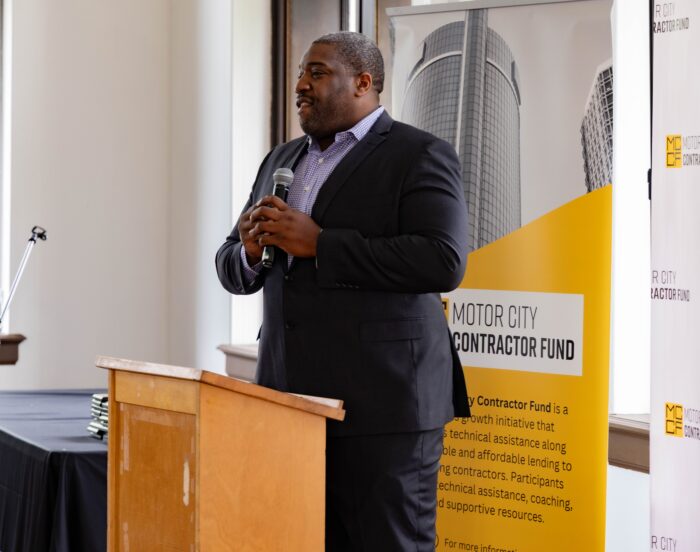
Launched in 2022, the Motor City Contractor Fund (MCCF) is a business growth initiative that provides technical assistance along with flexible and affordable lending to Detroit-based contractors. Participants receive 10 months of technical assistance, coaching, and supportive resources. MCCF reached a major milestone in 2025, serving 120 Detroit-based contractors and producing remarkable results: 70% increased revenue and 65% expanded bidding capacity, with a median annual revenue growth of 25%. This success demonstrates that targeted technical assistance paired with access to capital drives measurable business growth.

Building on this momentum, the team launched Ignite, a new contractor capacity-building initiative designed to support early-stage Detroit contractors earning approximately $65,000 annually with verified projects. Since its July launch, Ignite has already served nearly 75 contractors, creating a strong pipeline into the Motor City Contractor Fund and accelerating the growth and participation of Detroit-based contractors across the city’s development ecosystem.

Workforce Development and Education: From High School to High-Wage Careers

Project Genesis made a triumphant return in 2025 after shutting down during the COVID-19 pandemic. The relaunched program, made possible through support from Gilbert Family Foundation in partnership with the Detroit Public Safety Foundation, placed 24 Detroit youth across 20+ hospital units at Detroit Medical Center in hands-on roles spanning ICU, ER, OB/GYN, Radiology, and Surgical Care. This immersive experience provided early access to high-wage healthcare pathways rarely available to high school students, opening doors to career opportunities with lasting impact.

Gilbert Family Foundation also committed $910,000 to the Horatio Williams Foundation to support the Detroit Empowerment Hub, a new initiative providing pathways to independence for women, youth, and returning citizens. The hub trains women to become certified nursing assistants, introduces participants to careers in property management, and expands summer entrepreneurship programs for Detroit youth. Returning citizens also receive career support, including access to a new truck driving training program.

The investment with Horatio Williams Foundation also supported the Hoops and Culture HBCU College Expo. At the event, which brought more than 4,100 students and families to Wayne State University, Gilbert Family Foundation hosted a full day dedicated to economic mobility, headlined by the nationally recognized financial literacy platform Earn Your Leisure.

Gilbert Family Foundation committed $690,000 to Detroit Association of Black Organizations DABO Detroit to support workforce readiness for Detroit residents. As a result of the funding, DABO Detroit aims to connect a minimum of 400 Detroiters, to career pathways in high-demand fields such as healthcare, advanced manufacturing, construction, finance and real estate.

Additionally, through a partnership with DABO and the National College Resources Foundation, Gilbert Family Foundation supported an HBCU College Fair that connected 4,000 families to college access opportunities and unlocked more than $10 million in scholarships for participating students.

Supporting the Entrepreneurial Ecosystem:

The team launched the MI Small Business Helper, the first centralized hub of its kind to support Southeast Michigan entrepreneurs. Offering funding opportunities, step-by-step business guides, curated events, mentorship connections, and direct support from over 80 partnering business support organizations, this platform is transforming how entrepreneurs access resources. Additional features launching in 2026 will enable tracking of entrepreneurs and customization based on business stage, providing valuable data about how business owners move through the ecosystem.

The Economic Mobility Team also strengthened the idea-to-prototype pipeline through its support for the Centrepolis Accelerator program with Lawrence Technological University. The accelerator, which focuses on hard tech startups, supported 7 businesses that created 14 jobs with salaries ranging from $38,400 to $120,000. These businesses generated $483,000 in revenue and secured $3.5 million in leverage funding.

Venture 313 continued to provide value to Detroit’s entrepreneurial community by hosting TC Week in the D, which brought together 9 founders and 45+ investors from across the US for a week of resources and connections needed to raise venture capital.

Finally, the team launched Detroit Elevate a new program led by TechTown Detroit, in partnership with Black Leaders Detroit and QT Business Solutions. Detroit Elevate is designed to strengthen and support second-stage Detroit area businesses. The initiative combines funding, technical assistance, and community-driven engagement to drive customer traffic and visibility. Business owners also receive support in marketing and finance, along with operational improvements to ensure the long-term sustainability of their businesses.

Through 2025, Detroit Elevate supported 44 second-stage businesses with $326,000 in technical assistance, $15,000 in committed tax preparation, and 460 hours of virtual coaching and strategy sessions in its inaugural cohort.
Close

Public Spaces Year in Review

Thriving neighborhoods need more than housing and jobs—they need gathering places where residents connect, celebrate, and build community. In 2025, the Public Spaces Team continued to invest in programs and partnerships that ensure every Detroiter has access to vibrant, inclusive public spaces within a half mile of their homes.

Honoring Legacy Through Park Revitalization

In 2025, Gilbert Family Foundation had the honor of supporting the transformation of Marlowe Stoudamire Memorial Park into a revitalized neighborhood destination, featuring a walking loop, playground, multi-sport court, picnic shelter, fitness equipment, and enhanced green infrastructure.

The project honors the legacy of beloved community activist Marlowe Stoudamire, who passed away during the COVID-19 pandemic, by creating a safe, welcoming public space that supports recreation, wellness, and community connection for residents of all ages.

The revitalization aimed to strengthen neighborhood infrastructure and improve access to high-quality outdoor amenities in the surrounding Mapleridge community. The project was developed in partnership with the City of Detroit General Services Department and the Community Foundation for Southeast Michigan with direct input from city residents.

A DREAM to Bring Recreational Programming to Every Neighborhood

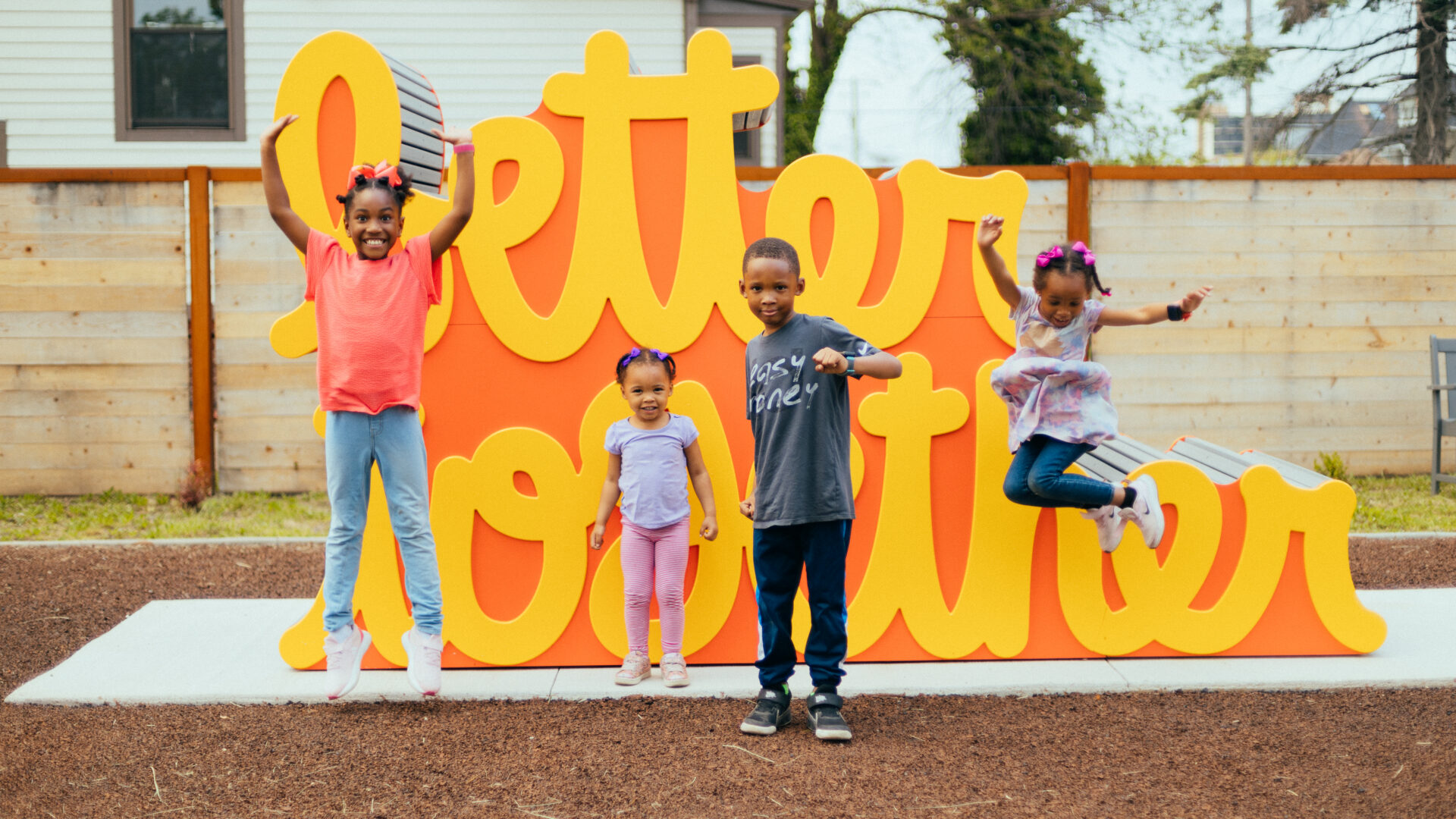
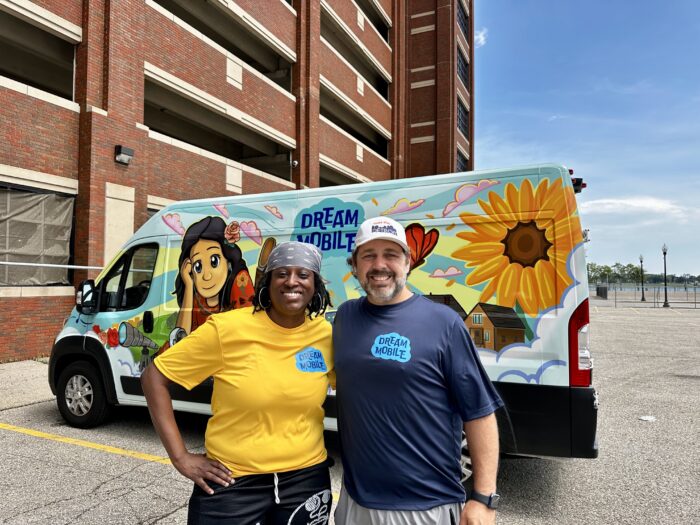
In 2025, the Public Spaces Team launched the Dream Mobile, an innovative mobile recreation program that brings recreational programming directly to Detroit neighborhoods. This initiative ensures that residents across the city—particularly in underserved areas—have access to quality recreational activities and programming.

By taking recreation on the road, the team expanded opportunities for community engagement and wellness beyond traditional fixed locations, making public spaces more accessible and inclusive for all of Detroit’s youth.

Supporting Small Business in the Heart of Downtown

For the eighth consecutive year, the Public Spaces Team partnered with Bedrock to announce the return of the Downtown Detroit Markets and the reopening of Cadillac Lodge. In 2025, eighteen local small businesses—the majority Detroit-based and BIPOC- or female-owned—brought retail, gifts, and artisan goods to Cadillac Square. The Markets have served as a launchpad for more than 145 small businesses, collectively generating nearly $6 million in sales. To strengthen their operations, each vendor also received coaching support from TechTown Detroit and $3,000 to help support them during and after the market season.

Building Organizational Capacity for Long-Term Impact

One key to long-term stability for public space partners is organizational capacity support. To this end, the Public Spaces team provided three-year capacity grants to NW Goldberg Cares and Friends of Rouge Park, investments that supported organizational sustainability and expanded community benefits. For NW Goldberg, funding supported the hiring of two full-time staff to strengthen programming and operate the summer camp, as well as the Breaking Bread Series, which brings community members together through shared meals prepared by local chefs.

For Friends of Rouge Park, grant support funded the organization’s first-ever Executive Director, additional staffing, and the planning and implementation of the park’s Centennial celebration. These partnerships were developed in collaboration with the Ralph C. Wilson Foundation and the City of Detroit’s General Services Department.

Supporting Community-Led Transformation

One hallmark of Gilbert Family Foundation’s work is its support for community-led innovation. The Canfield Consortium represents a powerful example of this approach. Though a newer nonprofit, the Canfield Consortium had demonstrated strong community stewardship and a clear vision for transforming local public space. However, they lacked access to foundation or government support to bring the plan to life. The Public Spaces team was able to work alongside the Consortium and Wayne Metro Community Action Alliance as a fiduciary partner to support the implementation of several important projects, including:

Remediation Forest Project, which uses native trees for stormwater management and ecological restoration

East Canfield Art Park, a public art and gathering space celebrating local culture

East Canfield Event Lawn, a flexible green space for community events and neighborhood activation.

By investing in a community-led vision, and helping connect the dots between neighborhood organizations, we demonstrated how strategic public space investments can restore the environment, celebrate culture, and strengthen neighborhoods all at once.

Close