Preserving Legacy Homeownership Through the Higginbotham Home Repair Program
Building OpportunityHousing StabilityJun 16, 2026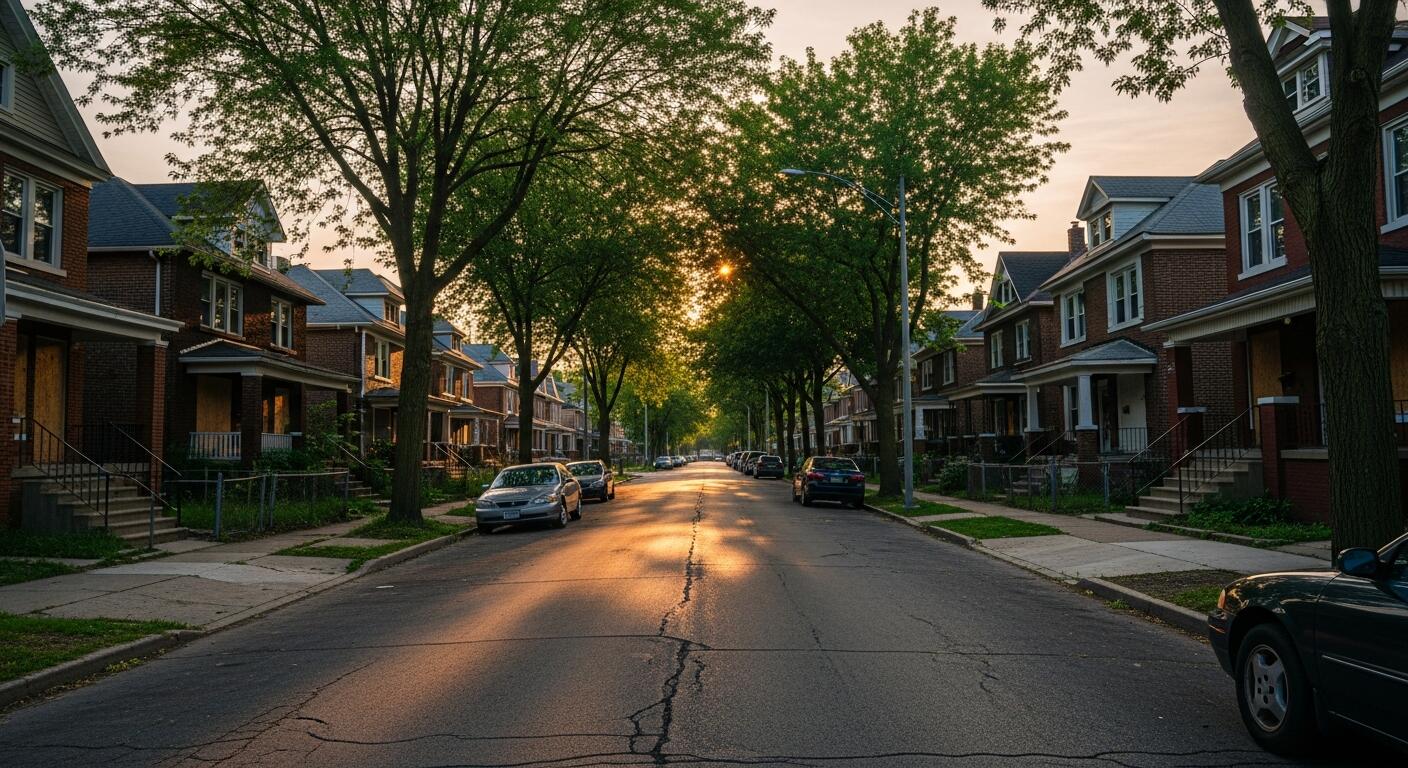
Teresa Moon sits in her living room surrounded by art, family photos and framed posters – including a dedication plaque from the neighborhood park that was named in her honor. Her home is cozy and colorful, an expression of her vibrant personality and her fierce commitment to the community that helped shape her.
Moon has lived in the Garden Homes Community – also known as the Pembroke Neighborhood near Eight Mile and Wyoming – for nearly 70 years.
She grew up on this block. Her grandmother lived two doors down. Her best friend since kindergarten still lives a street over. Directly across the street is Alfonso Wells Park, which has undergone a series of renovations in recent years. Moon is a dedicated community advocate, deeply involved in Emerge Community Organization, which leads neighborhood programming and beautification. Her efforts are so appreciated that the community dedicated the newly updated park in her honor. The dedication plaque sits proudly in the center of her bookshelf, supported by the books she loves.
“Home is more than just a house,” she says. “It’s not just a roof over your head. It’s the people around you. Home is the love and compassion that you get from the people that you grow up with.” For Moon, home means a lot of things: It’s her roots; it’s the place that shaped her identity, her worldview, and her connection to her community.
“I love Eight Mile,” Moon affirms. It made me the person I am.”
And for many longtime residents in this neighborhood, that feeling runs deep.
Moon refers to the neighborhood as “sacred ground” – a sentiment many of her neighbors share. It’s an iconic cultural and historical touchstone deeply connected to Detroit’s history of Black homeownership, civil rights and opportunity.
It is one of the first Black communities in Detroit, and the oldest Black community in the Northwest part of the city. This area was where Black families were able to secure FHA loans in the late 1950s, built largely by Black families who migrated from Black Bottom and fought against displacement. Most notably, that included the construction of the Birwood Wall, a segregation wall built in 1941 to separate the Black community from an all-white housing development. It is home to Higginbotham Elementary School – one of the first Black elementary schools in Detroit – and the first Urban League, making it a cornerstone of Black homeownership and civil rights history in the city.
“This neighborhood was predominantly a Black community with lower-middle-class working folks,” Moon recalls. “Big families, five or six kids. Most of the businesses were Black businesses. It was kind of self-contained.”
While many families eventually moved away, others – like Moon, stayed. “Nobody says they’re friends,” Moon explains. Instead, neighbors treat each other like family, saying: “That’s my brother. That’s my sister.” And it’s these kinds of relationships that turn a neighborhood into a community. But preserving those communities has become increasingly difficult.
Like many Detroit legacy homeowners, Moon has watched the city change over the decades. She has witnessed both the disinvestment that left many homes in need of repair and the new investment now arriving in neighborhoods across Detroit.
And those new investments are happening now. Development is already underway on the Higginbotham Art Residences – a bold plan to redevelop an abandoned school into 100 affordable housing units, as well as a dedicated community space that will host and celebrate local artists.
For longtime residents, these kinds of changes brings both opportunity and uncertainty.
Many homeowners in the neighborhood are seniors living on fixed incomes. As homes age, expensive repairs become harder to afford. At the same time, rising property values from new developments and increased interest from outside buyers all create new pressures.
Eighty-nine-year-old Caroline Jackson knows those pressures well. She regularly receives calls asking whether she wants to sell her home. “I’ll never leave,” she says. “My husband built this house. I’m going to stay here till I die.”
Residents like Jackson don’t want to leave the communities they spent decades building. But without this kind of support, they are at risk of displacement due to deferred maintenance, rising property taxes and complicated legal issues.
That’s why the Gilbert Family Foundation invested $300,000 in the Higginbotham Home Repair Program, initiated by URGE Imprint (the developer of the Higginbotham Art Residences) and managed by the Live6 Alliance. This investment will support at least 45 homeowners in the Garden Homes Community/Pembroke Neighborhood through exterior home repairs and housing stability services designed to help residents stay housed and preserve their most valuable asset: their home. The program includes repairs such as roofing, windows, doors, siding, gutters, landscaping and other exterior improvements, while also connecting residents to critical housing resources like the Homeowners Property Tax Exemption (HOPE), probate assistance, estate planning, and additional housing support services.
“We know that longtime residents – many of them elderly – are anchors for neighborhood stability, yet many are one emergency away from crisis,” said Andrea Benson, Director, Housing Stability at Gilbert Family Foundation. “Since one of our main goals on the Housing Stability team is to prevent displacement, we seek initiatives that are proactive in helping Detroit residents stay in their homes, preserving legacy homeownership and generational wealth.”
This holistic approach recognizes that preserving homeownership requires more than maintenance; it requires removing the legal and financial barriers that force seniors and legacy homeowners out of their homes. By investing in home preservation, we’re protecting generational wealth, stabilizing neighborhoods, and honoring the families who built these communities.
Many homeowners face barriers that are invisible from the street. Tangled titles, tax burdens, fixed incomes and deferred maintenance can all put long-term ownership at risk. Addressing those challenges alongside physical repairs helps ensure residents can remain in their homes for years to come – and preserve homeownership through the next generation. For legacy homeowners, that stability is critical. Because they are what makes the neighborhood unique.
These residents hold the neighborhood’s history, its relationships and its institutional memory. They are the people who watch over the block, mentor young people, organize community events and maintain the social fabric that keeps neighborhoods strong. When a legacy homeowner loses their home, a neighborhood loses more than a property owner. It loses a part of history, and an integral member of the community they helped build.
And the ripple effects of this preservation extend far beyond a single house. When dozens of homes are repaired, it strengthens the neighborhood. It inspires people to stay, to build community for the next generation. That vision of a thriving, stable community is what motivates Moon.
“I just want our community to be sustainable,” she says. “I just want our neighborhood to be one of those neighborhoods where, when you ride down the street, it’s like, ‘Oh yeah, this is a good neighborhood. This is a nice place. I wouldn’t mind living over here.'”
It is because of this shared vision – of vibrant, beautiful neighborhoods and strong communities – that we invest in Detroit. Because we believe every Detroiter deserves the opportunity to protect their most precious asset, seed generational wealth and remain in the communities they helped build.
Ultimately, investing in home repairs is not just about replacing windows or fixing roofs. We’re helping preserve history, strengthen neighborhoods and ensure that longtime Detroiters like Moon and Jackson can continue to call the communities they built home.